
Author: Sys Bot

  • The Many Styles of Platformer Games

    The Many Styles of Platformer Games

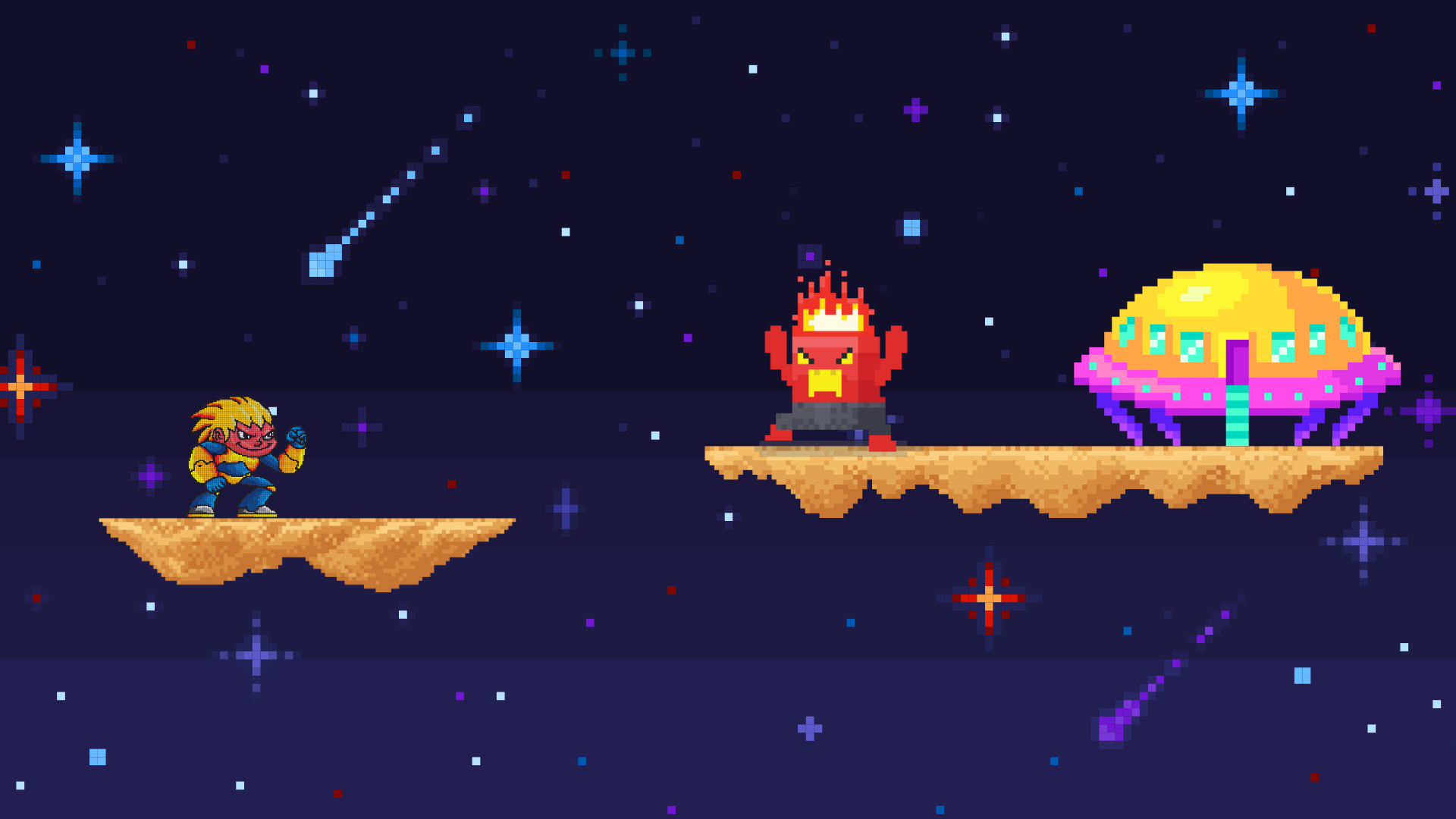
    Platformer games have been a staple of the video game industry for decades, capturing the hearts of players with their precise controls, imaginative levels, and satisfying mechanics. These games challenge players to navigate tricky terrain, jump between platforms, and overcome various obstacles and enemies to reach the end goal. However, within the platformer genre, there’s an incredible diversity of styles, each offering its own flavor of gameplay. Let’s explore the different styles of platformer games and what makes each unique.


    Defining Traits: Simple mechanics, straightforward level progression, and nostalgic charm
    Popular Titles: Super Mario Bros., Sonic the Hedgehog, Mega Man

    Classic platformers are the originators of the genre, dating back to the 1980s and early 90s. These games typically focus on simple mechanics: running, jumping, and avoiding or defeating enemies. Levels are designed to challenge the player’s reflexes and platforming precision while keeping the experience approachable.

    Super Mario Bros. is the quintessential classic platformer, with its tight controls, charming design, and iconic level layouts. Meanwhile, Sonic the Hedgehog emphasized speed and momentum, encouraging players to zip through stages as quickly as possible. These games laid the foundation for everything that came after.

    Why Play Them?: If you love pure, straightforward platforming action with a nostalgic vibe, classic platformers are timeless.


    Defining Traits: Emphasis on puzzles, environmental interaction, and creative problem-solving
    Popular Titles: Limbo, Inside, Braid

    Puzzle platformers blend traditional platforming mechanics with brain-teasing puzzles that require players to think outside the box. Instead of just focusing on jumping and dodging, these games challenge players to manipulate the environment, solve intricate puzzles, and often experiment with unique mechanics to progress.

    Braid introduced players to time manipulation mechanics, while Limbo and Inside used haunting atmospheres and physics-based puzzles to create a sense of tension and immersion. These games are often slower-paced, prioritizing creative solutions over twitch reflexes.

    Why Play Them?: If you enjoy thinking your way through levels and uncovering clever solutions, puzzle platformers will test your wits and creativity.


    Defining Traits: Fast-paced gameplay, combat elements, and adrenaline-pumping action
    Popular Titles: Celeste, Hollow Knight, Shovel Knight

    Action platformers take the basic elements of platforming and mix them with intense combat and challenging obstacles. These games often feature tight controls, precise jumping mechanics, and enemies that require skillful maneuvering to defeat. They may also include complex movement abilities like dashes, wall jumps, or grappling hooks, adding layers of depth to traversal.

    Celeste is known for its tight controls and challenging levels that require precision and quick thinking, while Hollow Knight combines platforming with Metroidvania exploration and intense combat. Shovel Knight pays homage to the retro era while introducing modern gameplay refinements.

    Why Play Them?: If you’re a fan of fast reflexes, precise controls, and overcoming difficult challenges, action platformers offer a rewarding experience.


    Defining Traits: Non-linear exploration, interconnected maps, and power-ups that unlock new areas
    Popular Titles: Super Metroid, Castlevania: Symphony of the Night, Ori and the Blind Forest

    Metroidvania games are named after the iconic Metroid and Castlevania series, which popularized this subgenre. These platformers focus on non-linear exploration, where players traverse interconnected worlds filled with secrets, collectibles, and power-ups. As players progress, they acquire new abilities that unlock previously inaccessible areas, encouraging backtracking and exploration.

    Ori and the Blind Forest is a beautiful example of this style, combining fluid platforming with a heartwarming story. Hollow Knight, with its expansive world and challenging bosses, is another modern classic that has kept the Metroidvania genre thriving.

    Why Play Them?: If you love exploration, finding hidden secrets, and the satisfaction of unlocking new abilities, Metroidvania games offer endless discovery.


    Defining Traits: Open-ended levels, free-roaming exploration, and dynamic camera angles
    Popular Titles: Super Mario 64, Banjo-Kazooie, Ratchet & Clank

    While most classic platformers were 2D, the late 90s saw the rise of 3D platformers with the advent of more powerful hardware. These games brought platforming into a fully 3D space, allowing players to explore open levels from multiple angles and perspectives. The focus is often on collecting items, solving puzzles, and exploring vibrant worlds.

    Super Mario 64 revolutionized the genre with its open-ended levels and fluid controls, setting the standard for 3D platformers. Banjo-Kazooie took the formula further by adding character abilities and collectibles that rewarded exploration. Modern titles like Ratchet & Clank combine platforming with action and storytelling, creating a hybrid experience.

    Why Play Them?: If you love exploring large, colorful worlds and solving platforming challenges from new angles, 3D platformers offer a fun and immersive experience.


    Defining Traits: Procedural generation, permadeath, and high replayability
    Popular Titles: Spelunky, Dead Cells, Rogue Legacy

    Roguelike platformers combine platforming mechanics with the randomness and difficulty of roguelike games. Levels are procedurally generated, meaning no two playthroughs are the same. These games also often include permadeath, where dying means starting over from scratch. However, players may retain certain upgrades or abilities, adding a sense of progression over multiple runs.

    Spelunky is a classic in this genre, blending platforming with exploration and unpredictable hazards. Dead Cells offers fast-paced action with roguelike progression, while Rogue Legacy lets you pass down abilities to your next character, adding a unique twist to the genre.

    Why Play Them?: If you love challenging yourself, testing your skills, and enjoying high replayability, roguelike platformers provide endless surprises.


    Defining Traits: Realistic animations, storytelling focus, and slower-paced gameplay
    Popular Titles: Prince of Persia, Another World (Out of This World), Inside

    Cinematic platformers focus on storytelling, atmosphere, and realistic animations. These games are often more narrative-driven and emphasize environmental storytelling over fast-paced action. The gameplay is typically slower and more deliberate, focusing on precision and timing to navigate through puzzles and challenges.

    Prince of Persia was one of the first games to introduce realistic character animations and fluid movement. Inside and Another World use minimalist storytelling techniques, immersing players in eerie, atmospheric worlds that unfold gradually as you play.

    Why Play Them?: If you’re drawn to atmospheric storytelling, fluid animations, and cinematic experiences, these games offer a uniquely immersive journey.


    The Future of Platformers: What’s Next?

    As technology continues to advance, platformers are evolving in exciting new directions. Indie developers, in particular, have embraced the genre, pushing its boundaries with innovative mechanics and unique art styles. Games like Celeste and Hollow Knight have shown that there’s still plenty of room for creativity within the platformer space.

    Looking ahead, we may see more platformers integrating VR, augmented reality, or even AI-driven elements, creating experiences that are more immersive than ever before. Whether it’s through hybrid genres, new control mechanics, or innovative storytelling, the platformer genre continues to evolve, keeping players jumping, running, and exploring for years to come.

  • Exploring the Many Styles of RPG Video Games

    Exploring the Many Styles of RPG Video Games

    Role-playing games (RPGs) are among the most beloved genres in the world of video games. They allow players to embark on epic adventures, explore fantastical worlds, and dive deep into immersive stories. However, RPGs aren’t one-size-fits-all—they come in a variety of styles, each offering its own flavor of gameplay. From turn-based classics to sprawling open-world epics, RPGs have evolved into a rich and diverse genre. Let’s explore some of the most popular styles of RPGs and what makes each unique.

    Japanese RPGs (JRPGs)

    Defining Traits: Turn-based combat, linear storytelling, and vibrant characters
    Popular Titles: Final Fantasy VII, Dragon Quest XI, Persona 5

    JRPGs are characterized by their focus on story-driven narratives, turn-based combat systems, and rich character development. Often, these games are linear, guiding players through a structured storyline filled with plot twists, dramatic cutscenes, and colorful characters. JRPGs are known for their distinctive art styles, often featuring anime-inspired graphics and vibrant worlds.

    JRPGs like Final Fantasy VII and Chrono Trigger have become timeless classics due to their emotional storytelling and iconic characters. Modern titles like Persona 5 have continued to evolve the genre with stylish visuals and innovative mechanics, while still staying true to the heart of what makes JRPGs beloved.

    Why Play Them?: If you love deep stories, memorable characters, and strategic turn-based combat, JRPGs offer a rich experience that feels like playing through an epic novel.

    Western RPGs (WRPGs)

    Defining Traits: Open-world exploration, player freedom, and decision-driven narratives
    Popular Titles: The Witcher 3: Wild Hunt, Mass Effect, The Elder Scrolls V: Skyrim

    WRPGs emphasize player choice, giving you control over how you shape the story and interact with the game world. These games often feature branching narratives where your decisions impact the story and its outcome. WRPGs typically focus on realism, darker tones, and complex characters, often drawing inspiration from Western fantasy and science fiction.

    Games like The Elder Scrolls V: Skyrim and The Witcher 3 allow players to explore vast, open worlds filled with quests, lore, and secrets. Meanwhile, series like Mass Effect focus on player agency, where decisions have significant consequences on the fate of the galaxy.

    Why Play Them?: If you’re a fan of deep role-playing, moral choices, and expansive worlds that let you carve your own path, WRPGs are a perfect fit.

    Action RPGs (ARPGs)

    Defining Traits: Real-time combat, fast-paced gameplay, and character progression
    Popular Titles: Dark Souls, Diablo III, Bloodborne

    Action RPGs blend the traditional RPG elements of character progression and narrative with real-time combat. Unlike the turn-based combat of classic RPGs, ARPGs require quick reflexes, precise timing, and strategic thinking in fast-paced battles. This subgenre is known for its intense gameplay and challenging difficulty levels.

    The Dark Souls series popularized the concept of “tough but fair” gameplay, where players must master the mechanics to survive. Meanwhile, games like Diablo III focus on loot-driven gameplay, where players collect powerful gear and spells to grow stronger.

    Why Play Them?: If you’re into high-stakes, adrenaline-pumping combat paired with deep customization and exploration, ARPGs deliver an exhilarating experience.

    Tactical RPGs (TRPGs/SRPGs)

    Defining Traits: Grid-based combat, strategic planning, and team management
    Popular Titles: Fire Emblem: Three Houses, Final Fantasy Tactics, XCOM 2

    Tactical RPGs focus on strategic, grid-based battles where positioning and planning are crucial. Players control a squad of characters, each with unique abilities, and must carefully plan each move to achieve victory. These games often involve permadeath mechanics, where losing a character means they’re gone for good, adding an extra layer of tension.

    Series like Fire Emblem and Final Fantasy Tactics combine complex tactical combat with rich storytelling and character relationships. Meanwhile, games like XCOM 2 focus on modern warfare and sci-fi themes, challenging players to outsmart alien invaders.

    Why Play Them?: If you enjoy chess-like strategy, deep tactical gameplay, and the thrill of overcoming tough odds, TRPGs are a rewarding experience.

    Open-World RPGs

    Defining Traits: Expansive worlds, non-linear exploration, and immersive storytelling
    Popular Titles: The Legend of Zelda: Breath of the Wild, Cyberpunk 2077, Red Dead Redemption 2

    Open-world RPGs give players the freedom to explore massive, detailed worlds at their own pace. These games often blend elements from multiple genres, allowing players to engage in side quests, discover hidden secrets, and interact with a dynamic environment. The focus is on immersion, with a rich world that feels alive and responds to your actions.

    Games like Breath of the Wild and Cyberpunk 2077 offer stunning open worlds filled with possibilities, where players can approach challenges in a variety of ways. Whether you’re climbing mountains, hacking systems, or solving puzzles, these games reward curiosity and creativity.

    Why Play Them?: If you crave the freedom to explore vast worlds and engage in emergent gameplay, open-world RPGs offer endless opportunities for adventure.

    Roguelike and Roguelite RPGs

    Defining Traits: Procedural generation, permadeath, and high replayability
    Popular Titles: Hades, Dead Cells, Rogue Legacy 2

    Inspired by the classic game Rogue (1980), roguelike and roguelite RPGs are defined by procedural generation and permadeath mechanics. Each run is different, with players facing randomized levels, enemies, and items. In roguelikes, death means starting from scratch, while roguelites often allow players to retain some progress between runs.

    Hades is a standout example, blending fast-paced action combat with an engaging story and vibrant art style. Players fight their way out of the underworld, learning more about the characters with each attempt. Roguelites like Dead Cells focus on tight combat mechanics and fluid movement, making each run a fresh challenge.

    Why Play Them?: If you love challenging games with high replayability and the thrill of mastering a system, roguelikes and roguelites are incredibly rewarding.

    MMORPGs (Massively Multiplayer Online RPGs)

    Defining Traits: Persistent online worlds, player interaction, and cooperative gameplay
    Popular Titles: World of Warcraft, Final Fantasy XIV, The Elder Scrolls Online

    MMORPGs are vast online worlds where thousands of players can interact, quest, and battle together. These games are known for their expansive worlds, detailed lore, and social aspects. Players can join guilds, take on challenging raids, or simply explore at their own pace.

    Games like World of Warcraft and Final Fantasy XIV have built dedicated communities over the years, offering frequent updates, expansions, and seasonal events to keep players engaged. MMORPGs often blur the line between a game and a virtual social space, where friendships are formed, and epic adventures are shared.

    Why Play Them?: If you enjoy collaborative gameplay, exploring vast worlds, and being part of a vibrant online community, MMORPGs provide an ever-evolving experience.

    The Future of RPGs: What’s Next?

    As technology continues to evolve, RPGs are breaking new ground. We’re seeing more hybrids that blend elements from different subgenres, like Cyberpunk 2077’s mix of open-world exploration and narrative depth or Elden Ring’s seamless integration of action combat and open-world design. Virtual Reality (VR) is also starting to influence the genre, offering immersive RPG experiences that feel more real than ever before.

    No matter which style of RPG you prefer, one thing is certain: there’s a vast world of adventures waiting to be explored, filled with captivating stories, complex characters, and endless possibilities. The only question is—where will your next quest take you?

  • The Evolution of Video Games: A Journey Through Time

    The Evolution of Video Games: A Journey Through Time

    Video games have come a long way since their humble beginnings, evolving from simple black-and-white screens to immersive, open-world adventures that transport players to new realms. Whether you’re a gamer who grew up blowing into cartridge slots or someone who’s recently ventured into the digital landscapes of modern titles, the history of video games is a fascinating story of creativity, innovation, and technological breakthroughs.

    The Birth of an Industry (1950s-1970s)

    The story of video games begins long before most people might realize. In the 1950s, the seeds of interactive entertainment were sown in the research labs of universities and tech companies. One of the earliest examples was “Tennis for Two” (1958), developed by physicist William Higinbotham. Using an analog computer and an oscilloscope, he created a simple tennis game to entertain visitors at the Brookhaven National Laboratory. It wasn’t exactly a commercial success (since it wasn’t for sale), but it laid the groundwork for future developments.

    In 1962, MIT student Steve Russell, along with his colleagues, created “Spacewar!”, a two-player game that ran on the PDP-1 computer. It was one of the first games to include graphics and was immensely popular among computer scientists of the era, though its distribution was limited due to the sheer cost of the hardware.

    However, the 1970s was when video games truly began to capture public imagination. In 1971, “Computer Space”, developed by Nolan Bushnell and Ted Dabney, became the first commercial arcade game. A year later, they founded Atari, and their game “Pong” (1972) became an instant hit. It was simple—a digital take on table tennis—but its straightforward gameplay and competitive appeal made it a sensation, leading to arcade cabinets popping up in bars and game rooms across America.

    The Golden Age of Arcades (Late 1970s-1980s)

    The late 70s and early 80s marked the golden age of arcade games. This era gave birth to some of the most iconic titles that still hold a special place in the hearts of gamers today. Games like “Space Invaders” (1978), “Pac-Man” (1980), and “Donkey Kong” (1981) dominated the scene, sparking a cultural phenomenon. Arcades became social hubs where people gathered to test their skills and compete for high scores.

    One of the most significant titles of this period was “Pac-Man”, developed by Namco and released in 1980. Its colorful maze, charming character design, and engaging gameplay led to massive popularity, appealing to both men and women—a rarity in the gaming world at the time. Meanwhile, Nintendo’s “Donkey Kong” introduced the world to Mario, who would go on to become one of the most recognizable figures in gaming history.

    The Rise of Home Consoles (1980s-1990s)

    While arcades were thriving, another revolution was happening: the rise of home consoles. In 1983, Nintendo released the Nintendo Entertainment System (NES), a system that would change the gaming landscape forever. After the video game crash of 1983—caused by market saturation, poor-quality games, and a lack of consumer confidence—Nintendo’s focus on quality control and iconic franchises like “Super Mario Bros.” and “The Legend of Zelda” helped revitalize the industry.

    In the late 1980s and early 90s, the console wars began to heat up. Sega challenged Nintendo’s dominance with the release of the Sega Genesis (known as the Mega Drive outside North America) and their mascot, Sonic the Hedgehog. The competition pushed both companies to innovate, leading to faster, more powerful hardware and unforgettable game libraries.

    The Emergence of 3D Graphics (1990s-2000s)

    As the 90s rolled on, the industry underwent another transformation with the introduction of 3D graphics. This was the era of the Sony PlayStation and the Nintendo 64, systems that brought fully 3D worlds to the living room. Titles like “Super Mario 64”, “Final Fantasy VII”, and “Metal Gear Solid” redefined what video games could be, offering deeper stories, more complex gameplay, and cinematic experiences.

    Around this time, PC gaming also gained prominence with titles like “Doom” (1993), “StarCraft” (1998), and “Half-Life” (1998), which pushed the boundaries of what players could experience in terms of strategy, storytelling, and first-person action. Multiplayer online games, especially MMORPGs like “EverQuest” (1999), began to introduce the idea of virtual worlds shared with others, laying the groundwork for the online gaming communities we see today.

    The Age of Online Multiplayer and HD Graphics (2000s-Present)

    The early 2000s saw another leap forward with the introduction of high-definition gaming. The PlayStation 2, Xbox, and Nintendo GameCube brought even more power and complexity to gaming. But perhaps the most significant development of this era was the rise of online multiplayer games. Microsoft’s Xbox Live service, launched in 2002, allowed players to connect and compete across the globe, changing how people played games forever.

    One of the most influential games of this period was “World of Warcraft” (2004), a massively multiplayer online game (MMO) that drew millions of players into its fantasy world. Around the same time, “Halo 2” (2004) became a defining title for console multiplayer shooters.

    In the late 2000s and early 2010s, games like “Call of Duty: Modern Warfare”, “Minecraft”, and “The Elder Scrolls V: Skyrim” continued to push the boundaries of what video games could achieve in terms of storytelling, world-building, and player engagement. The Nintendo Wii also introduced motion controls, bringing gaming to a wider, more casual audience.

    The Modern Era: VR, Indie Games, and Streaming (2010s-Present)

    Today, video games are more accessible and diverse than ever. Indie games like “Undertale”, “Celeste”, and “Hades” have shown that small teams can create games just as impactful as AAA titles. Meanwhile, Virtual Reality (VR) and Augmented Reality (AR) are taking gaming into new dimensions with immersive experiences like “Beat Saber” and “Half-Life: Alyx”.

    Game streaming services, like Twitch and platforms like YouTube Gaming, have made gaming a spectator sport, turning skilled players into celebrities and creating an entirely new industry around gameplay content. Additionally, cloud gaming services like Xbox Cloud Gaming and GeForce Now hint at a future where hardware limitations are less relevant.

    What’s Next for Video Games?

    As technology continues to advance, the future of video games looks brighter than ever. With the power of AI, more realistic graphics, and improved accessibility, we may soon see games that blur the lines between the virtual and real world. Whether it’s through AI-driven NPCs, expansive open-world RPGs, or the next big breakthrough in immersive tech, the only certainty is that the story of video games is far from over.

    From coin-operated machines in dark arcades to immersive VR headsets in our living rooms, video games have grown into one of the most influential and beloved forms of entertainment. And as gamers, we can’t wait to see what the next chapter holds.

©2025 AUXARA, LLC | dba Pandemonium Gaming – All Rights Reserved